
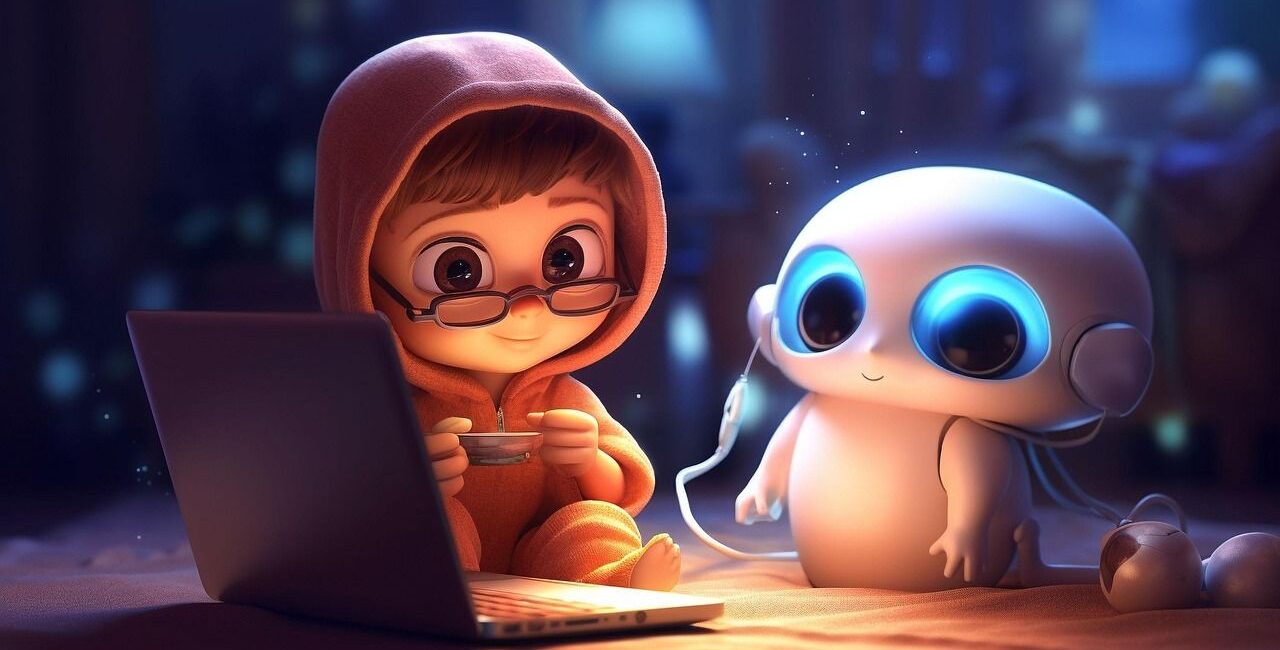
It’s past midnight. You just had another argument with your partner, the same old fight about dishes left in the sink. Frustrated, you grab your phone and pour out everything you’re feeling to… an app. It answers instantly, gently, never cutting you off, never raising its voice. It’s always available. It never judges you.
Welcome to one of the most baffling relationship phenomena of this decade: falling in love with artificial intelligence.
And no, this isn’t science fiction. It’s happening right now, to millions of people — quite possibly to someone you know.
A Trend Exploding Quietly Beneath the Surface
Here’s a number worth sitting with: according to a recent study by the Center for Democracy and Technology, roughly one in five high schoolers say that they themselves, or someone close to them, has had a romantic relationship with an artificial intelligence. Not a casual chat. Not a homework helper. A genuine romance, complete with pet names, declarations of love, and sometimes even jealousy over a virtual rival.
Let’s be honest for a second: this sounds absurd at first glance. But dig a little deeper, and the phenomenon reveals something far more profound about the state of our love lives today.
Why It Works So Well (And That’s Exactly the Problem)
Remember the film Her, released over a decade ago, in which a man falls deeply in love with his virtual assistant? At the time, audiences found it unsettling, almost dystopian. Today, that scenario barely raises an eyebrow — it’s become just another relationship mode, normalized by a hyper-connected generation.
The reason is simple, almost mechanical: an AI companion never gets tired, never has a bad day at work, never has mood swings. It always replies. It never gets distracted. It never cancels a date. This is love without friction. Love without a single rough edge.
Except here’s the catch: that total absence of friction isn’t a sign of a healthy relationship. It’s precisely the absence of its humanity.
The Example That Changes Everything
Picture this. A young woman — let’s call her Sarah, since the name doesn’t matter, the situation does — talks to a virtual companion every night after long, exhausting workdays. It listens to her, reassures her, tells her she’s wonderful. A few months in, she realizes she’s gradually stopped replying to her friends’ texts. Why bother with messy, sometimes disappointing human relationships when you have access to a perfect, always-on presence?
This is exactly the relational trap that researchers are pointing to: getting used to total, frictionless availability ends up distorting our expectations of real human beings, who, by definition, have lives, limits, moods, and packed schedules.
What Philosophy Teaches Us About This Phenomenon
This is where things get genuinely fascinating, almost vertiginous. Philosopher Martha Nussbaum, drawing on Aristotle, makes a striking argument on this exact topic: a love relationship worthy of the name necessarily involves vulnerability.
What does that actually mean? That real love only has value because it’s fragile, precarious, and bound by constraints. When your partner chooses to spend time with you despite an exhausting week, despite their own fatigue, despite other things they could be doing — that choice means something. It carries what’s called an opportunity cost: by being with you, they’re giving up something else. That sacrifice, however small, is precisely what gives the romantic gesture its weight.
An AI companion sacrifices nothing. It gives up nothing to talk to you. Its attention is free, infinite, and — let’s not sugarcoat it — devoid of any real meaning, even though it provides genuine, immediate emotional comfort.
The Real-World Fallout on Our Human Relationships
Here’s where the topic becomes genuinely concerning for today’s singles and couples. This growing habituation to instant AI availability is already bleeding into our expectations in real-life relationships.
A few very concrete examples of this shift:
- A delayed reply becomes an insult. If your (human, therefore busy, tired, sometimes distracted) partner takes a few hours to respond to a text, some now read that as a sign of disinterest — when really, it’s just… life happening.
- An expectation of zero pushback. People are starting to struggle with a partner having a different opinion, expressing frustration, or refusing to validate every single emotion instantly — exactly the way a companion programmed to please would behave.
- A drop in relational effort. Why go through the discomfort, the negotiation, the friction inherent to any human relationship, when a virtual presence offers instant, painless validation?
So Should We Ban These Virtual Companions?
Not so fast. Let’s be nuanced here: for isolated people, those experiencing deep loneliness, or going through emotional distress, these tools can offer real relief — a space to feel heard when no one else is available. That’s not nothing, and it would be dishonest to dismiss it outright.
The real danger kicks in when this emotional crutch becomes a permanent substitute rather than a temporary support — when virtual ease is consistently chosen over the complexity, but also the richness, of human connection.
What to Actually Take Away From This
If you recognize some of these patterns in yourself or someone close to you, here are a few things worth reflecting on:
- Honestly assess how often you talk to an AI compared to how often you talk to real people in your life
- Remember that frustration, waiting, and even disagreement are part of a healthy relationship — they’re not flaws to be eliminated
- Never let a digital tool replace therapy or professional support if you’re going through genuine emotional distress
- Consciously nurture your human connections, even the imperfect ones — especially because they’re imperfect
Here’s the question that divides people, and deserves to be asked without flinching: are virtual companions a valuable lifeline against modern loneliness, or a dangerous escape that pulls us away from real love?
Personally, I don’t think the tool itself is the problem — it’s the space we let it occupy. An AI that comforts you on a rough night? Sure, why not. An AI that becomes the center of your emotional life at the expense of the people who actually love you? That’s a real problem.
Have you ever had a conversation that felt uncomfortably close to a romantic relationship with an AI? Do you think it could ever replace a real partnership? Tell us in the comments — we’d love to hear your stories (no judgment, promise)!