
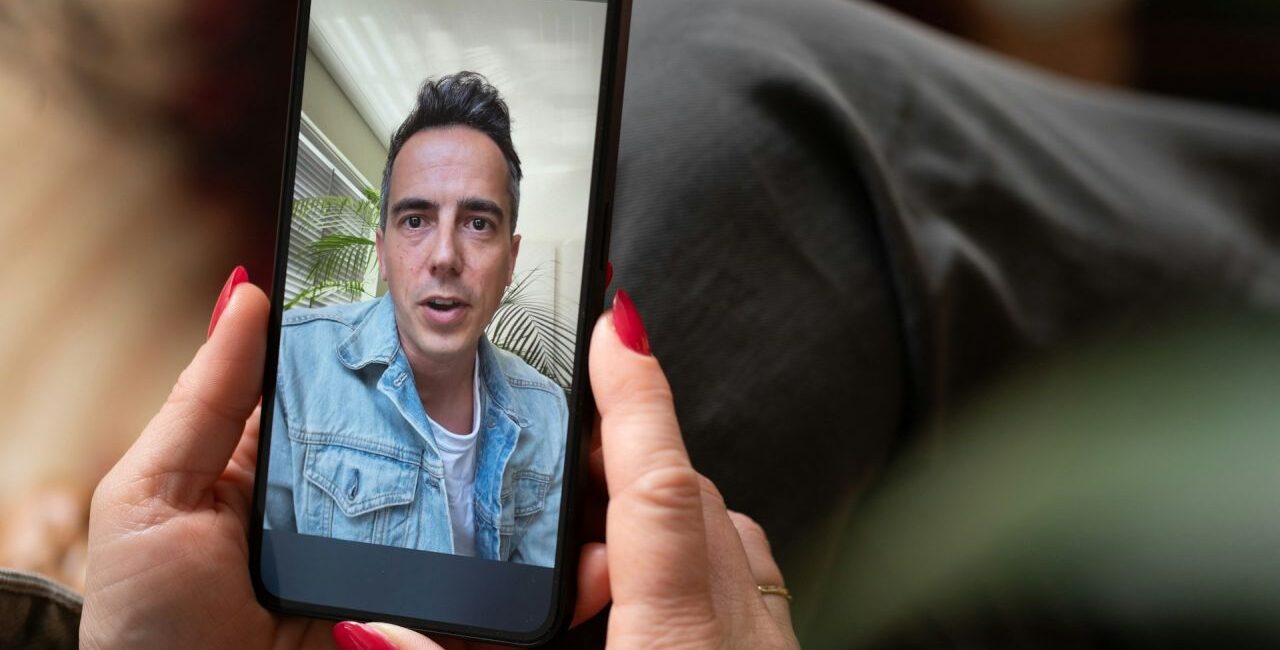
A few years ago, suggesting a video call before a first date could come across as insecure, maybe even a little paranoid. In 2026, it’s the opposite: refusing one is what raises eyebrows. The video call has become an almost mandatory step in online dating — both a genuinely effective seduction tool and the best shield against romance scams.
A chemistry filter that saves everyone’s time
Singles over 60 have even given the practice a name: the “ChemRIZZtry check,” a roughly 20-minute video call before agreeing to meet in person. The idea has spread well beyond that age group: according to several dating analysts, this short video format lets people quickly gauge whether there’s real chemistry, without committing a whole evening — or weeks of texting — to find out. You hear tone of voice, catch a real facial expression, sense an energy — things no text, however well-crafted, can convey.
One dating coach puts it well: the point of a video call before a date isn’t to feel instant chemistry — that’s genuinely hard to gauge through a screen — it’s simply to figure out whether you enjoy spending time with this person.
Still the best anti-scam tool we have
On the protection side, the numbers speak for themselves: roughly one in ten profiles on free platforms is estimated to be entirely fake. A video call remains, for now, the most reliable way to expose a fake profile: it confirms the person actually looks like their photos and can hold a natural, real-time conversation — two things scammers still struggle to fake.
This connects directly to the Abu Trica case we covered — the AI-assisted romance scam network that cost victims over $8 million. Even with generated photos and painstakingly crafted messages, no AI could yet sustain a spontaneous, fluid video conversation. That’s exactly what makes the video call so valuable.
One caveat worth knowing, though: real-time video deepfakes are improving fast, and some safety guides now recommend not relying on the video call alone, but pairing it with other checks — reverse image search, profile consistency, never sending money, meeting in public. The video call is still a powerful filter, just no longer an absolute, foolproof one.
How to actually use it well
- No need to rush it: a video call after a few days of messaging, once some baseline trust exists, tends to work better than one forced five minutes after the match
- Keep it short — 10 to 15 minutes is plenty to gauge the spark, no need to commit a full hour
- Get your lighting right: face a window or a lamp instead of having it behind you, it makes a real difference
- One excuse to delay the call can happen to anyone; repeated, systematic refusal is a red flag worth taking seriously
- Never send money, no matter what emergency comes up during or after the call
An especially high-stakes issue for the diaspora
For couples meeting across continents — Cameroon and Europe, North America, or elsewhere — the video call carries even more weight: before booking a flight, before sending a dowry remotely, before making a serious family commitment, it helps confirm you’re actually building a relationship with a real person, not with a profile carefully engineered to exploit distance and trust.
I think this normalization of the video call is genuinely good news, honestly overdue. For too long, we let the most polished storytelling do all the seductive work, sometimes at the cost of serious financial and emotional disillusionment. A video call isn’t a lack of romance — it’s a form of respect, both for yourself and for the other person, finally giving them the chance to show up as who they actually are.
At what point in the conversation do you usually suggest — or accept — a first video call, and has a repeated refusal ever been the thing that tipped you off?